新闻资讯
新闻资讯
 761 次
761 次An anechoic chamber is an essential laboratory in the field of sound testing, and constructing one requires significant investment. So what materials are needed in the production process of an anechoic chamber?
The construction of an anechoic chamber is fundamentally similar to conventional building construction, with the key difference being that an anechoic chamber can function as a standalone device. There are two core factors in building an anechoic chamber: isolating external noise and absorbing internal sound, making the choice of raw materials critically important.
We all know that sound is essentially vibration transmission. Since anechoic chambers are mostly used in industrial production where equipment vibrations are unavoidable, they typically employ "floating structures" for vibration isolation. Common vibration isolation materials include: anti-vibration pads, damping floors, rubber isolators, and composite shock absorbers. Concrete also provides vibration damping effects.
Soundproofing materials are the primary components used in floors, walls, and ceilings. Common materials include: acoustic foam, wooden soundproof panels, framing studs, and composite soundproof walls.
The other critical element is sound absorption. Acoustic wedges are the signature material of anechoic chambers and create the diffuse sound field. Unlike ordinary soundproof rooms, anechoic chambers feature acoustic wedges installed on all six surfaces (full anechoic) or five surfaces (semi-anechoic). Other absorbing materials include acoustic foam and sound-absorbing panels.
Beyond sound isolation and absorption, anechoic chambers must also be fireproof and moisture-resistant while maintaining aesthetic appeal. Fireproof materials typically include fire-resistant mesh fabric, while exterior steel panels provide both soundproofing and fire/moisture protection. Waterproof coatings are used when painting the steel panels.
In addition to the main materials mentioned above, various components are essential: sealing strips, electrical systems, lighting fixtures, soundproof doors/windows, monitoring systems, pneumatic light barriers, and sensors.
The above provides a general introduction to materials required for constructing an anechoic chamber.
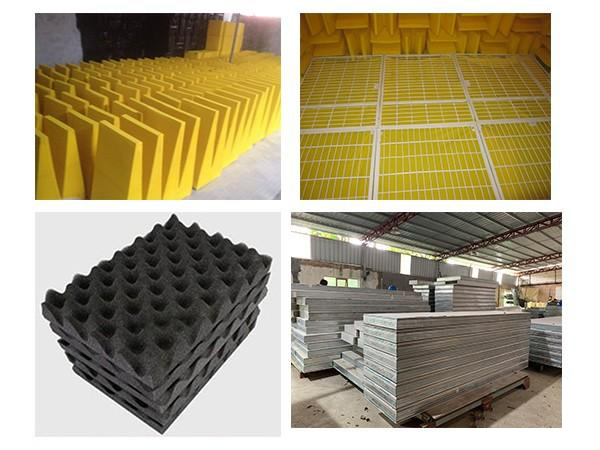
Materials Required for Anechoic Chamber Construction
 1321 次
 1599 次
 1389 次
 726 次
726 次
发布日期: 2024-06-27

发布日期: 2024-04-30
发布日期: 2024-06-06
发布日期: 2025-12-12
发布日期: 2024-04-12

发布日期: 2023-12-07

发布日期: 2024-05-07
发布日期: 2024-08-22
发布日期: 2026-09-18
发布日期: 2026-09-18
发布日期: 2026-04-13
发布日期: 2026-04-13
发布日期: 2026-04-13